Related Aftercare Protocols
- Stage 2 Hydration: Compare formulas in our Best Tattoo Aftercare Lotion Guide.
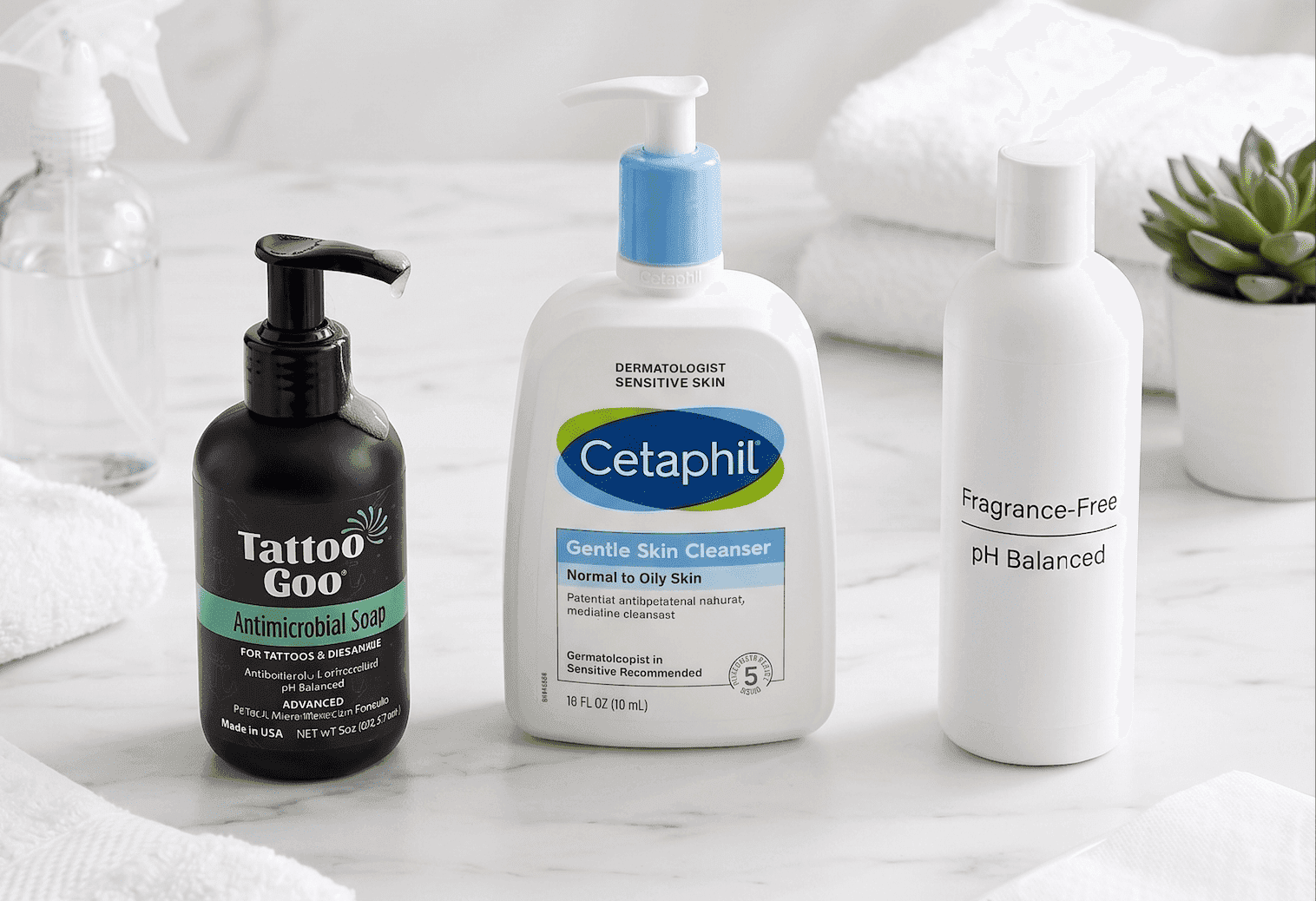
- Washing Protocol: See gentle cleanser options in our Best Soap for Tattoo Aftercare Guide.
- Complications: Learn to identify early symptoms in our Tattoo Infection vs Healing Guide.
The Ranked List
DISCLOSURE: This post contains affiliate links. If you purchase through our links we may earn a small commission at no extra cost to you.
Saniderm Original Tattoo Aftercare Bandage
RELIABILITY AND PROVEN CLINICAL TRACK RECORD.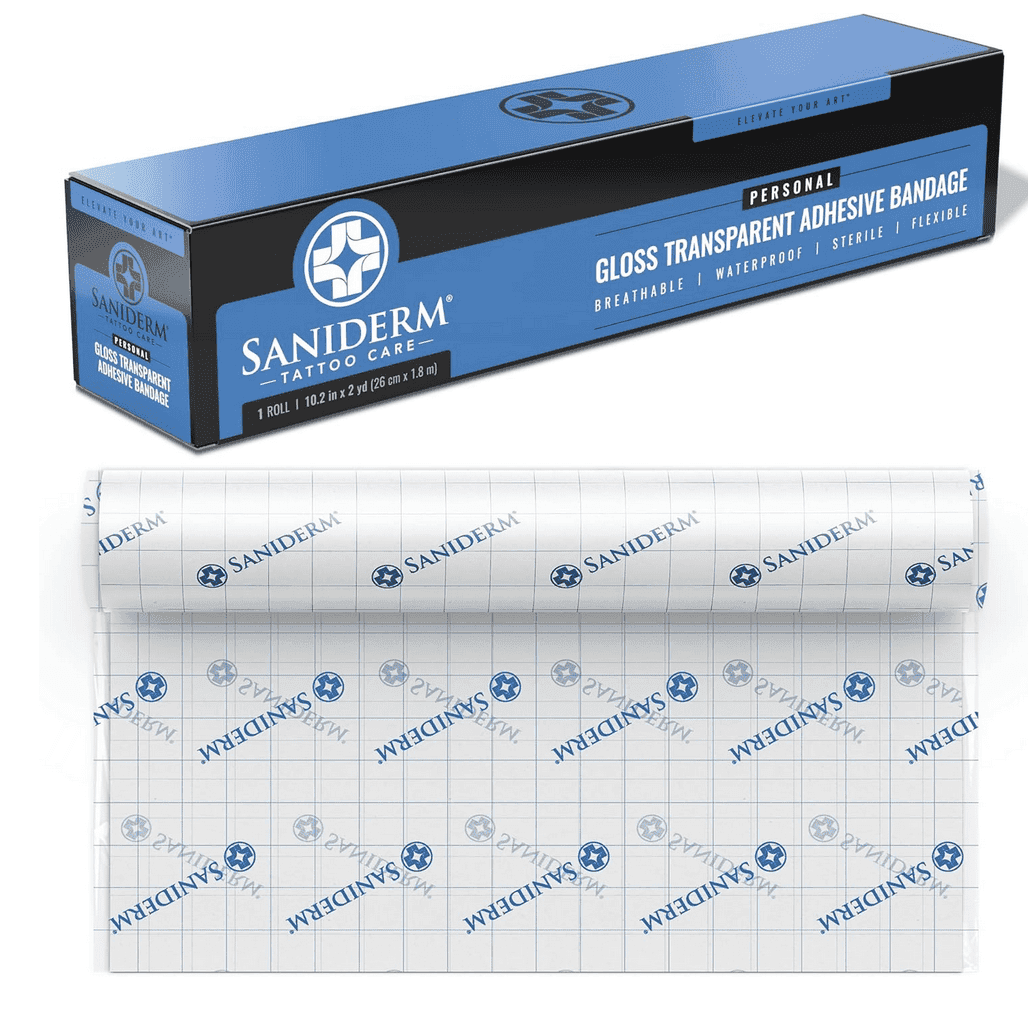
This is the one every artist knows. Medical-grade polyurethane that lets the skin breathe while keeping crap out. It prevents scabbing during those first critical 72 hours better than anything else we tested.
The adhesive is extremely strong; if you have sensitive skin, removing this film too quickly can cause mechanical irritation to the surrounding healthy skin.
Why Plasma Under Film Accelerates Healing
Plasma is the liquid component of blood — the yellow fluid that weeps from a fresh wound before clotting is complete. It contains fibrin for clotting, immunoglobulins for infection prevention, and critically, growth factors including platelet-derived growth factor and epidermal growth factor that signal keratinocytes to migrate across the wound surface and rebuild the epidermis. Under traditional open-air aftercare these growth factors evaporate or are washed away during the cleaning process, meaning the skin has to generate new signalling molecules to maintain the repair cascade. Under film the growth factors stay in contact with the wound continuously. Keratinocyte migration happens faster, the inflammatory phase resolves sooner, and the epidermis rebuilds more completely in the first two weeks. This is the clinical basis for moist wound healing — a principle established in wound care medicine in the 1960s that tattoo aftercare adopted significantly later. The film does not do anything magical. It just keeps the environment that optimal healing requires from evaporating.
"The cloudy fluid under the film is plasma — growth factors your skin is using to heal faster. Removing the film early because it looks alarming is removing the treatment, not the problem."
Already have your design? Each design in our library includes the recommended aftercare protocol for its specific style and placement. Browse verified designs →
Exactly What To Do, Day by Day
CLEAN.
Wash the area with fragrance-free soap and pat dry with a paper towel.
APPLY.
Cut the film to leave a 1-inch border around the tattoo. Apply to clean, dry skin.
WAIT.
Keep the first piece on for 24 hours. Some fluid buildup is normal.
CHANGE.
Remove carefully. Wash, dry, and apply a second piece if the tattoo is still weeping.
MONITOR.
If the skin around the tattoo becomes intensely red or hot to the touch, remove the film and switch to a standard wash-and-moisturize routine.
What To Never Use
Does tattoo film actually prevent infection?
Yes, by creating a sterile, waterproof barrier that blocks dust, bacteria, and friction during the initial 14-day healing window.
How long should I leave a tattoo bandage on?
For the first application, leave it on for 24 hours. Subsequent applications can stay on for up to 5 days, depending on fluid buildup.
Can I shower with tattoo film on?
Yes, these products are waterproof. However, keep shower time brief and avoid submerging the tattoo in pools or bathtubs.
Does tattoo film ruin the ink?
No. It prevents scabbing, which is the primary cause of ink loss and uneven color saturation in new tattoos.