Redness and soreness are normal — pus, spreading redness, and fever aren't. How to tell infection from healing, what to do at each level, and when it's urgent.
By TattoosMap Editorial — August 2026
The Short Answer
A tattoo infection shows as increasing pain, spreading redness (especially in streaks), swelling that worsens after the first few days, pus or foul discharge, heat, and sometimes fever — unlike normal healing, which steadily improves within days. See a doctor promptly for these signs, because a skin infection needs antibiotics and won't resolve on its own. Seek emergency care immediately for fever, red streaks spreading from the tattoo, or feeling seriously unwell, as these can signal the infection spreading beyond the skin.
DISCLOSURE: This post contains affiliate links. If you purchase through our links we may earn a small commission at no extra cost to you.
Think of watching a healing tattoo like watching a fire in a fireplace. A normal fire is supposed to be hot, red, and a bit smoky — that's not a problem, that's it working.
What you're actually watching for is the fire doing something a fire shouldn't: spreading past the hearth, throwing sparks across the room, filling the house with smoke. A healing tattoo is the same — red and sore and settling day by day is normal. You're watching for the signs it's spreading past where it should, because that's when a normal process has become a problem that needs putting out.
Your tattoo is red, sore, and swollen — but a new tattoo is supposed to be red, sore, and swollen, so how do you know if it's healing or infected?
That's the whole question, and getting the answer right early matters more than almost anything else in aftercare. A caught-early infection is a minor problem. A missed one isn't.
Normal Healing vs Infection — The Core Distinction
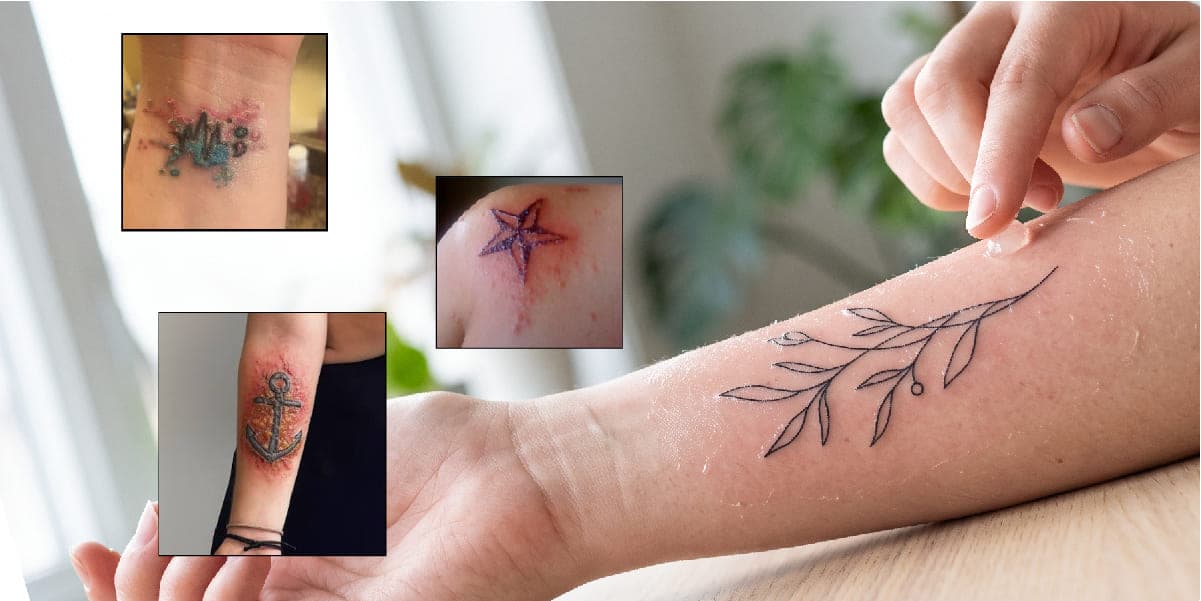
The single most useful thing to understand is the difference between what a healing tattoo normally does and what an infected one does. They start out looking similar and then diverge.
Normal Healing (expected, no cause for concern)
Redness, mild swelling, and warmth in the first 2 to 3 days
Soreness like a bruise or sunburn, easing steadily
Some clear or lightly-tinted oozing in the first day or two
Itching and flaking or peeling as it heals
Steady day-by-day improvement — the key signal
Infection (needs medical attention)
Pain that increases after the first few days instead of easing
Redness that spreads outward, especially in streaks or lines
Swelling that worsens rather than settling
Pus — thick, yellow, green, or foul-smelling discharge
Heat — the area hot to the touch
Fever, chills, or feeling unwell
The tattoo hardening or feeling increasingly tender days in
The direction of travel is the tell. Normal healing gets better each day; infection gets worse.
"If you're on day five and it's more painful, redder, and more swollen than day two, that trajectory is the warning."
WHY A FRESH TATTOO IS VULNERABLE TO INFECTION
A fresh tattoo is an open wound — and the two most common bacterial threats are Staphylococcus aureus and its drug-resistant variant MRSA. Both colonise skin surfaces naturally in roughly 30% of the population, which means infection risk is not about exposure to unusual pathogens. It is about whether bacteria that are already present get a pathway into the dermis through compromised skin.
The distinction between a normal healing response and a genuine infection comes down to the nature of the immune activity. Normal healing involves a localised histamine response — redness, warmth, and mild swelling caused by increased blood flow bringing repair cells to the wound. This is expected and resolves within days as the skin closes.
An infection is different. Bacterial proliferation inside the wound triggers neutrophil recruitment and purulent drainage — the body attempting to wall off and expel the pathogen. The clinical signs are increasing rather than decreasing over time: expanding redness, mounting pain, hardening tissue, and fever indicating systemic involvement. Once bacteria breach from a localised infection into the bloodstream, the condition progresses toward sepsis — a medical emergency requiring immediate antibiotic intervention, not home treatment.
The critical practical point is directionality. Normal healing improves daily. Infection worsens daily. If the site looks better each morning than it did the night before, the biology is working correctly. If it looks worse — especially if redness is spreading beyond the tattoo boundary or red streaks are appearing — that is the signal to seek medical attention the same day.
SHARE THIS
"Normal healing gets better every day; infection gets worse — if day five is redder and more painful than day two, that trajectory is the warning."
FROM TATTOOSMAP
Already have your design? Each design in our library includes the recommended aftercare protocol for its specific style and placement. Browse verified designs →
Exactly What To Do, Day by Day
01
JUDGE THE TRAJECTORY OVER THE FIRST DAYS
Normal healing improves steadily day by day, while infection worsens. If pain, redness, and swelling are increasing rather than easing after the first 2 to 3 days, treat that as a warning sign.
02
CHECK FOR THE SPECIFIC INFECTION SIGNS
Look for thick coloured or foul-smelling pus, spreading redness, heat, and increasing pain — these distinguish infection from the clear fluid, steady improvement, and easing soreness of normal healing.
03
CONTACT YOUR ARTIST OR A DOCTOR EARLY IF WORSENING
Reputable artists want to know and can advise whether it looks normal, but anything worsening or showing clear infection signs needs a doctor, since a skin infection needs antibiotics and won't clear on its own.
04
TREAT RED STREAKS OR FEVER AS AN EMERGENCY
Red streaks spreading from the tattoo, fever, chills, or feeling seriously unwell mean the infection may be spreading beyond the skin. Seek urgent care immediately rather than waiting for an appointment.
05
DON'T SELF-TREAT AN ESTABLISHED INFECTION
Extra cleaning, ointments, or leftover antibiotics delay proper treatment and let it worsen. Once infection has taken hold, it's a medical issue needing professional assessment and likely a prescription.
What To Never Use
Waiting out a worsening tattoo
a real infection needs antibiotics and won't resolve on its own, so a tattoo getting more painful, red, or swollen after the first few days needs a doctor, not more time.
Ignoring red streaks or fever
these signal the infection may be spreading beyond the skin toward the lymphatic system or bloodstream, which is an emergency, not a wait-and-see situation.
Self-treating with leftover antibiotics or aggressive home remedies
this delays proper assessment, can worsen the infection, and misuses antibiotics, when what's needed is a doctor's diagnosis.
Picking, squeezing, or over-handling an infected or healing tattoo
it worsens and spreads infection and introduces new bacteria through broken skin, when clean hands and minimal handling are what's needed.
Frequently Asked Questions
Increasing pain, spreading redness (especially in streaks), worsening swelling, heat, and thick yellow, green, or foul-smelling pus — sometimes with fever. Unlike normal healing, which improves steadily within days, an infected tattoo gets worse over time. The key signal is the direction: healing improves, infection deteriorates.
Normal healing brings redness, mild swelling, soreness, and flaking that steadily improve within 2 to 3 days and resolve over 2 to 4 weeks. Infection shows increasing pain, spreading redness, pus, heat, and possibly fever, getting worse rather than better. If day five looks worse than day two, treat it as a possible infection and see a doctor.
See a doctor promptly for pus, spreading redness, worsening pain or swelling, heat, or a tattoo that's deteriorating rather than healing. Seek emergency care immediately for red streaks spreading from the tattoo, fever, chills, or feeling seriously unwell, as these can mean the infection is spreading beyond the skin.
A true established infection usually won't — it typically needs antibiotics, and the earlier it's treated the simpler that is. Mild early irritation may settle with good aftercare and close watching, but once there's pus, spreading redness, or fever, it's a medical issue needing a doctor rather than home care.
Choose a clean, licensed, reputable studio with proper sterilisation and single-use needles, follow aftercare carefully, keep your hands and dirty water off it, don't pick scabs, and don't submerge it in pools or lakes until healed. Good hygiene before and after is your biggest defence, since infection depends on bacteria reaching the open wound.
Discussion (0)
Verified Accounts
No public comments yet.
Find Your Artist
Ready To Book?
Browse verified tattoo artists on TattoosMap — filtered by style, city, and specialty.
The overlap in the first couple of days is genuine, and it's honest to admit you sometimes can't be certain immediately.
Early on, a normally-healing tattoo and an early infection can look similar — both red, both swollen, both sore. What separates them is the pattern over time, which means occasionally the only way to know is to watch closely for a day or two.
The practical rule: if it's improving each day, it's likely fine; if it's worsening, plateauing badly, or developing pus or fever, don't wait it out. When genuinely unsure, a doctor or your tattoo artist can look sooner rather than later.
The Warning Signs in Detail
Some signs deserve a closer look, because their specifics guide how urgently to act.
Pus and Discharge
A little clear or slightly cloudy fluid early on is normal. Thick, opaque, yellow, green, or bad-smelling discharge is not — that's a hallmark of infection and a clear reason to see a doctor.
Spreading Redness, Especially Streaks
Redness right at the tattoo is expected early. Redness that expands outward over days, and particularly red streaks radiating away from the tattoo, is a serious sign — streaking can indicate infection spreading through the lymphatic system, which needs urgent care.
Fever, Pain, and Other Signs
Fever and feeling unwell — a tattoo infection causing fever, chills, or a sick feeling has gone beyond a local issue and needs prompt attention, not a wait-and-see approach
Increasing pain — tattoos hurt less each day as they heal, so pain that ramps up is one of the most reliable early infection signals
New blisters, sores, or open areas that weren't there initially, especially with discharge, warrant a check
HONEST LIMITATION
Red streaks radiating from the tattoo and fever are the two signs where "see a doctor soon" becomes "seek care now," and it's important not to soften that.
Streaking can indicate the infection is entering the lymphatic system and potentially heading toward the bloodstream, and fever means your body is fighting something systemic — both can progress to serious, even life-threatening conditions like sepsis if ignored.
"If you have red streaks or fever with a tattoo, that's an emergency-care situation, not a next-week appointment."
These are rare, and most tattoo infections are minor and local. But the whole point of knowing the signs is recognising the small number that are genuinely urgent.
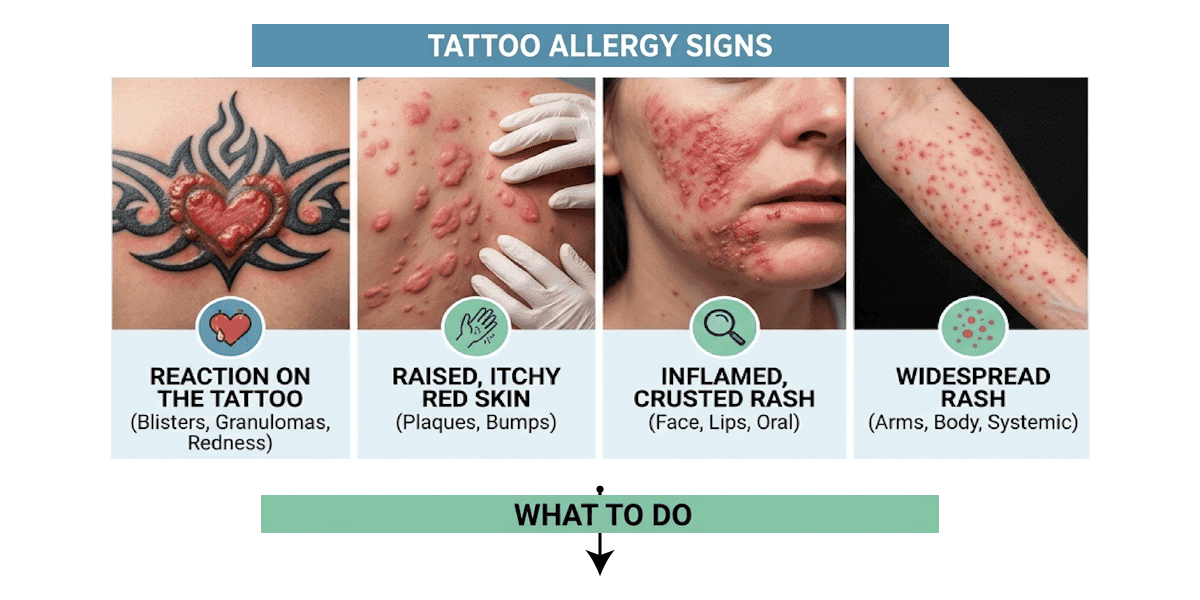
Infection vs Allergy — They're Not the Same
People confuse these because both cause redness and swelling, but they're different problems with different fixes, and telling them apart guides your response.
Infection Tends Toward
Increasing pain and tenderness
Pus or foul discharge
Spreading redness, streaks, heat
Fever and feeling unwell
Getting worse over days
Allergy Tends Toward
Persistent itching more than pain
Raised, bumpy, or scaly skin
Often confined to one colour, especially red
No pus or fever
Can appear long after healing, even years later
The rough guide: infection is painful, spreading, and systemic; allergy is itchy, localised to colours, and not accompanied by fever or pus. Our tattoo allergy guide covers the allergy side in depth.
HONEST LIMITATION
This distinction helps you gauge urgency, but it doesn't make you a diagnostician, and it's fair to say the two can occasionally overlap or coexist.
A severe allergy and an infection can both involve significant swelling and blistering, and it's possible to have irritation that's hard to categorise.
The value of knowing the difference is deciding how fast to act — infection signs like pus, fever, and spreading redness lean toward urgent care, while itchy localised bumps lean toward an allergy consultation. But a doctor distinguishes them reliably in ways you can't at home.
What to Do About It
Match your response to the severity.
For Mild Concern (early, uncertain, or minor signs)
Keep it clean — gentle washing with mild fragrance-free soap and water, pat dry
Don't pick, squeeze, or scratch — this worsens and spreads infection
Follow your aftercare and watch the trajectory closely over the next day or two
Take a photo each morning — the camera does not lie and the comparison tells you whether you are healing or worsening far more reliably than memory does.
Contact your tattoo artist — reputable ones want to know and can advise
See a doctor if it's worsening rather than improving
For a Likely Infection (pus, spreading redness, worsening pain, heat)
See a doctor promptly. A skin infection typically needs antibiotics and won't clear on its own — the earlier it's treated, the simpler the treatment.
Don't try to treat it yourself with leftover antibiotics or aggressive home remedies. You need proper assessment.
For an Emergency — Seek Urgent Care Immediately
Get help now if you have any of these:
Red streaks spreading from the tattoo
Fever, chills, or feeling seriously unwell
Rapidly spreading redness or swelling
Severe increasing pain
Dizziness or a racing heart
HONEST LIMITATION
A real infection is a medical issue, not a home-care one, and no amount of diligent aftercare substitutes for antibiotics once infection is established.
Aftercare prevents infection; it doesn't cure one that's taken hold. People sometimes try to manage a clear infection with extra cleaning, ointments, or old antibiotics, which delays proper treatment and lets it worsen.
"Early treatment is straightforward, delayed treatment gets complicated — and that gap is entirely avoidable by not trying to tough it out."
Preventing Infection in the First Place
Most infection risk is set before and just after the tattoo, and much of it is controllable:
The single most protective decision happens before the needle touches your skin — choosing a studio that takes sterilisation seriously. Everything after that is maintenance.
Choose a clean, reputable, licensed studio — proper sterilisation, single-use needles, gloves, and hygiene are your first and biggest defence
Follow aftercare properly — keep it clean, don't over-handle it, don't pick scabs, and keep it out of pools and lakes until healed (our swimming guide covers why submersion is a real risk)
Keep your hands off it — clean hands only, and only when necessary for washing
Don't remove protective film early or against your artist's instructions
Watch it during healing so you catch any problem early, when it's easiest to treat
HONEST LIMITATION
Taking infection seriously shouldn't tip into fear — serious tattoo infections are relatively uncommon when you use a reputable studio and follow aftercare, and most that occur are minor and treatable when caught early.
The point of knowing the signs isn't to inspect your healing tattoo anxiously every hour, but to recognise the genuine warning signs if they appear and act appropriately.
A well-done tattoo in a clean shop, cared for properly, usually heals without incident. Awareness means you're prepared to respond correctly to the rare problem, not that you should expect one.