DISCLOSURE: This post contains affiliate links. If you purchase through our links we may earn a small commission at no extra cost to you.
You got the tattoo, summer's here, and the pool is right there. Here's the answer nobody wants on a hot day: a new tattoo is an open wound, and putting an open wound underwater is how you turn a fresh piece into an infected, faded one. The wait is real, and it's longer than a few days.
The Actual Timeline
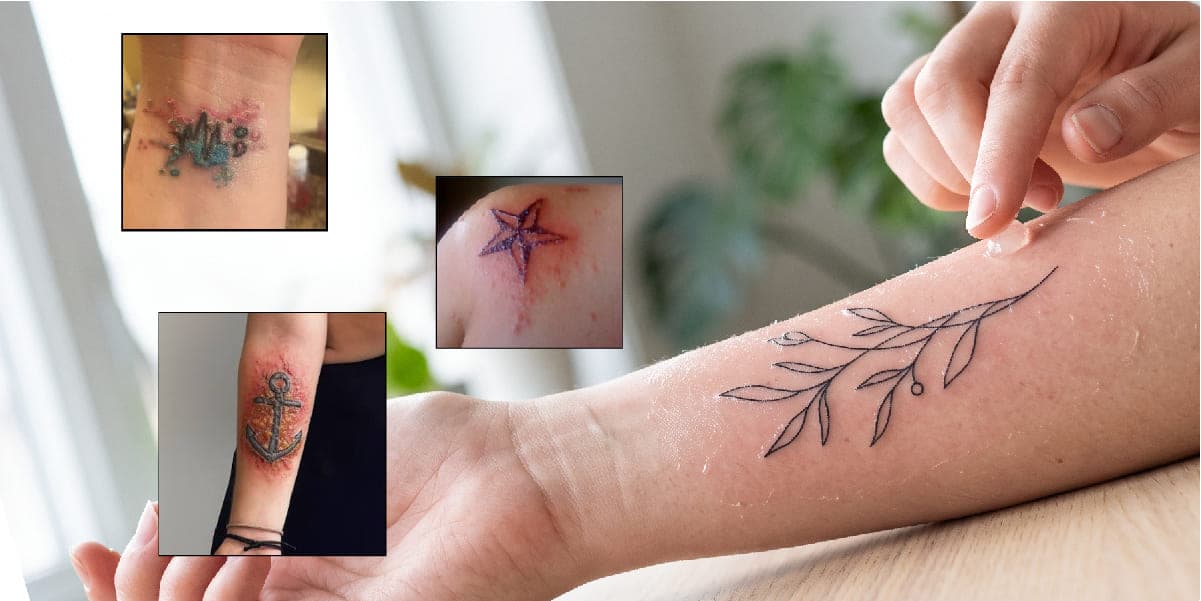
The rule is simple to state and harder to be patient with: don't submerge a new tattoo until it's fully healed. That means the surface has completely closed — no scabs, no peeling, no open or weeping areas, no raised or raw patches.
For most people that's 2 to 4 weeks, though it varies:
- Surface healing — the outer skin closing over — typically takes 2 to 3 weeks
- Larger or more detailed tattoos heal slower and may need the full 4 weeks or more
- Location matters — areas with more movement or friction take longer
- Your own healing rate — health, age, and aftercare all shift the timeline
The safe signal isn't a date on the calendar, it's the state of the skin. When the tattoo has stopped peeling, the scabs have fallen off on their own, and the surface looks and feels like normal skin (even if slightly shiny or tight), it's ready. Until then, it isn't.
The "2 to 4 weeks" figure is the surface-healing window, and it's worth knowing that your tattoo isn't fully healed underneath even when the surface looks ready. The deeper layers continue remodelling for months. For swimming, surface closure is the threshold that matters — once the skin has sealed, the infection and ink-loss risks drop dramatically — but don't take "it's been three weeks" as a rule if your skin still shows any scabbing or open areas. Judge the skin, not the date. A slow-healing tattoo overrides the average every time.
Why Water Is a Problem for a Fresh Tattoo
A new tattoo is broken skin, and broken skin plus water is a bad combination for several distinct reasons.
Infection. Open skin is an entry point for bacteria, and bodies of water are full of them. Submerging a healing tattoo introduces microbes directly into the wound, and a tattoo infection can mean pain, swelling, pus, fever, permanent damage to the design, and in serious cases a trip to the doctor for antibiotics.
Ink loss and fading. Prolonged water exposure softens and waterlogs the healing skin, loosening scabs prematurely and pulling ink out before it's settled. The result is patchy fading, blowouts, and areas that need touching up — you can literally wash out parts of a tattoo that hasn't sealed.
Chemical and salt irritation. Chlorine, salt, and other water treatments are harsh on an open wound, causing stinging, irritation, delayed healing, and colour distortion.
Waterlogging and slow healing. Even clean water, if the tattoo is submerged long enough, oversaturates the skin and disrupts the healing process, dragging out the whole recovery.
Showering is completely different from swimming, and people sometimes over-worry this into avoiding water entirely, which isn't necessary. A normal shower from day one is fine and part of proper aftercare — brief running water and gentle cleansing don't submerge or waterlog the tattoo. The problem is specifically prolonged submersion: soaking, swimming, baths. You should keep the tattoo clean with gentle washing throughout healing. It's sitting in water, not touching water at all, that you're avoiding.
Not All Water Is Equal
Different swimming environments carry different risks, and none of them are safe for an unhealed tattoo — but it's worth knowing how each one is bad.
Swimming pools. Chlorine is a harsh chemical irritant on open skin, causing stinging and colour distortion, and while chlorine kills many pathogens, pools still harbour bacteria and the chemical exposure itself damages a healing tattoo. Public pools add shared-water hygiene concerns.
Oceans and salt water. Salt water stings intensely on broken skin, and the ocean carries bacteria including, in some waters, aggressive organisms like Vibrio that can cause serious infections in open wounds. Sand adds abrasion and grit to the mix.
Lakes, rivers, and natural water. Often the highest bacterial and parasitic load of all, with unpredictable contamination. Natural fresh water is the riskiest option for an open wound.
Hot tubs and jacuzzis. Arguably the worst. Warm water is a bacterial breeding ground, hot tubs are notorious for organisms like Pseudomonas that cause folliculitis and infection, and the heat and jets add irritation. Avoid these longest.
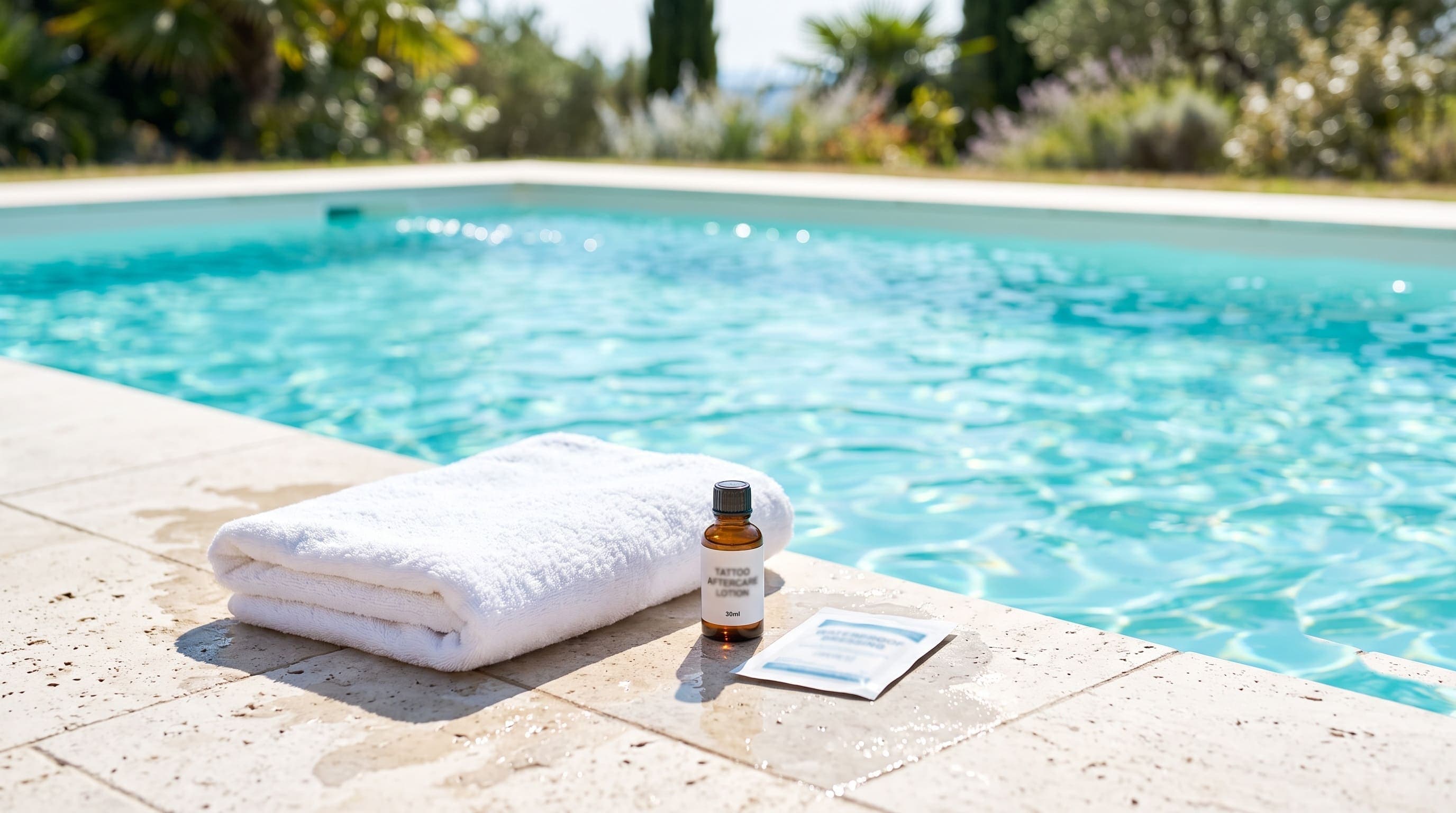
Even a quick dip counts, and this is where people rationalise their way into trouble. "Just a few minutes" in the pool or ocean still introduces bacteria to an open wound and still exposes it to chemicals or salt — the risk isn't only about long soaks. Waterproof bandages exist and some people use them for a brief unavoidable exposure, but they're not a reliable seal for actual swimming; water gets underneath, and manufacturers generally don't recommend them as a green light to swim on a fresh tattoo. Treat "healed" as the real permission, not a clever workaround.
What to Do If You Can't Avoid Water
Sometimes life doesn't wait — a holiday booked before the tattoo, a job that involves water. Honest harm-reduction, while being clear none of it makes swimming truly safe on a fresh tattoo:
- The genuine answer is to time the tattoo around the water, not the water around the tattoo. If you have a beach holiday coming, get inked after it, not the week before.
- If exposure is truly unavoidable, a fresh waterproof dressing changed immediately after, plus thorough gentle cleaning and drying, reduces but does not remove the risk.
- Rinse and clean immediately after any accidental exposure — fresh water, gentle soap, pat dry, reapply aftercare.
- Watch closely for infection in the following days: increasing redness, swelling, heat, pus, or fever means see a doctor.
No dressing, product, or technique makes swimming on an unhealed tattoo genuinely safe, and it would be dishonest to imply a reliable workaround exists. Waterproof bandages leak, "quick" exposures still carry risk, and the tattoo industry's consistent advice is simply to wait — because the people offering this advice have seen the infected, faded, blown-out results of not waiting. If you take one thing from this: the only real solution is patience, and the second-best solution is planning your tattoo timing so patience isn't tested. Everything else is damage control on a risk you didn't need to take.
Think of a fresh tattoo like wet concrete. For the first stretch it looks set on top long before it's actually cured underneath, and anything that disturbs it — a footprint, a splash, pressure too soon — leaves a permanent mark in what should have been smooth. You wouldn't hose down a freshly poured path because the surface looked dry. Your tattoo is the same: give it the full time to set properly, and it holds the shape it was meant to. Rush it into the water, and you're stuck with however it sets after you disturbed it.
Related Aftercare Protocols
- Stage 2 Hydration: Compare formulas in our Best Tattoo Aftercare Lotion Guide.
- Washing Protocol: See gentle cleanser options in our Best Soap for Tattoo Aftercare Guide.
- Complications: Learn to identify early symptoms in our Tattoo Infection vs Healing Guide.
WHY AN OPEN WOUND LOSES INK IN WATER
A fresh tattoo is thousands of microscopic puncture wounds through the epidermis into the dermis. Until those punctures close over — a process called re-epithelialisation, where new skin cells migrate across the wound surface — the skin barrier that keeps water out and pathogens in is simply not intact. The primary aquatic risk is Pseudomonas aeruginosa, a gram-negative bacterium that thrives in pool, spa, and natural water environments. Unlike many common skin bacteria, Pseudomonas is particularly opportunistic in compromised skin and is a leading cause of wound infections in open skin. Hot tubs are especially high risk because warm water accelerates bacterial growth and the jets create aerosolised water that penetrates wound surfaces directly. The secondary risk is osmotic ink leaching. When healing skin is submerged for extended periods, the tissue becomes waterlogged — a process called epidermal maceration. Softened, waterlogged skin loses structural integrity in the wound bed, and ink particles that have not yet been encapsulated by dermal fibroblasts can be physically drawn out of the wound with the water as it penetrates and then evaporates. This is the mechanism behind the patchy fading people see when they swim too early. The distinction between showering and submerging matters. Brief exposure to running water does not create the sustained osmotic pressure or bacterial colonisation risk that submersion does. Showers from day one are part of correct aftercare. Baths, pools, oceans, and hot tubs are the specific risk — the duration and stillness of submersion is what creates both the bacterial and osmotic threat.
"A quick dip still counts — a few minutes in the pool delivers bacteria straight into an open wound and can wash ink out of skin that hasn't sealed."
Already have your design? Each design in our library includes the recommended aftercare protocol for its specific style and placement. Browse verified designs →
Exactly What To Do, Day by Day
WAIT FOR FULL SURFACE HEALING BEFORE ANY SUBMERSION
Give it 2 to 4 weeks and judge the skin, not the calendar — no scabs, no peeling, no open or weeping areas, and a surface that looks and feels like normal skin.
SHOWER NORMALLY BUT DON'T SOAK
Brief running water and gentle cleansing from day one are part of proper aftercare; it's prolonged submersion — swimming, baths, hot tubs — that you avoid until healed.
AVOID HOT TUBS AND NATURAL WATER LONGEST
Warm water and untreated lakes and rivers carry the heaviest bacterial loads, so these are the riskiest and the last to become safe even near the end of healing.
PLAN THE TATTOO AROUND THE WATER NOT THE OTHER WAY
If a beach holiday or water event is coming, schedule the tattoo for after it, since timing is the only genuinely safe way to avoid the conflict.
CLEAN IMMEDIATELY AND WATCH FOR INFECTION AFTER ANY EXPOSURE
If the tattoo does get submerged, rinse with fresh water, gently clean, pat dry, and reapply aftercare — then watch for increasing redness, swelling, heat, pus, or fever and see a doctor if they appear.
What To Never Use
Swimming before the skin has fully closed
a fresh tattoo is an open wound, and submersion introduces bacteria that cause infection while water flushes unsettled ink back out of the skin.
Hot tubs and jacuzzis during healing
warm water breeds bacteria like Pseudomonas and the heat and jets irritate the wound, making these the riskiest water of all for a new tattoo.
Relying on a waterproof bandage to swim
water gets underneath, the seal isn't reliable for actual submersion, and manufacturers generally don't endorse them as permission to swim on fresh ink.
Judging readiness by the date instead of the skin
a slow-healing tattoo still scabbing at three weeks isn't ready, so the state of the surface overrides any average timeline.