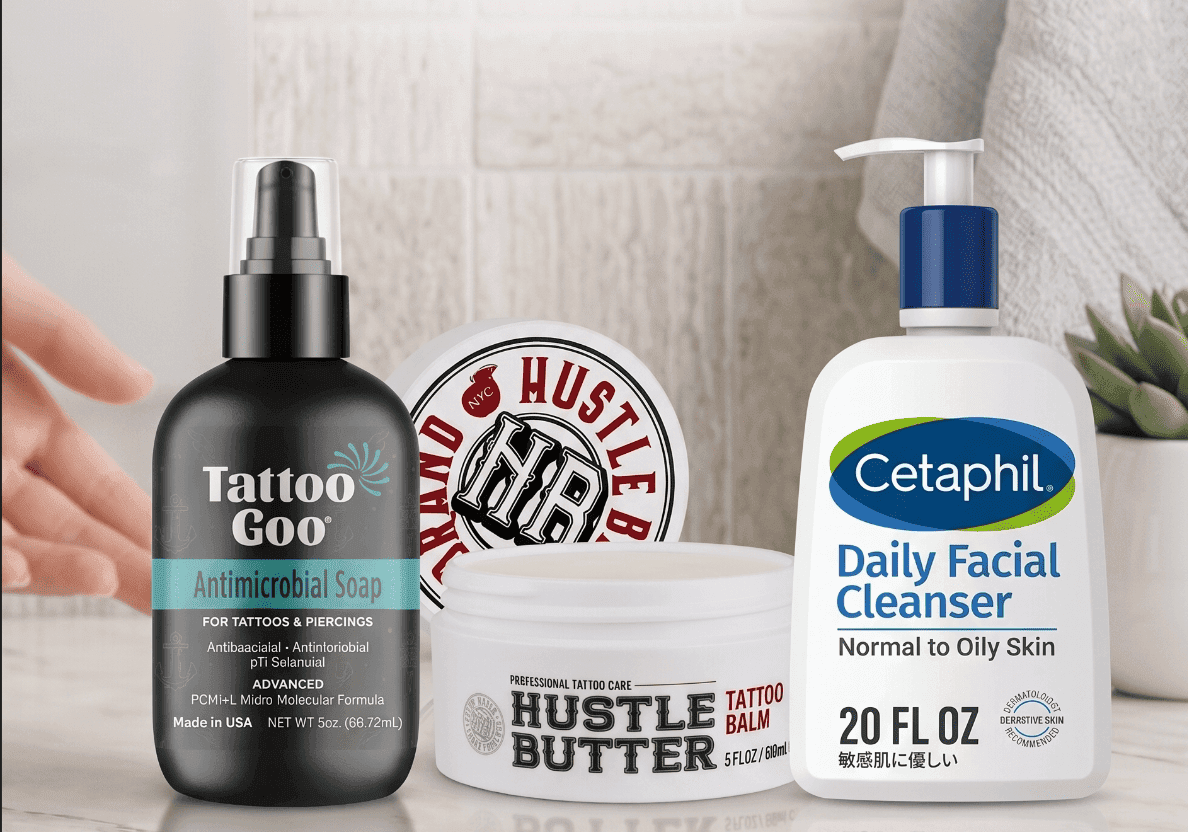
Related Aftercare Protocols
- Stage 2 Hydration: Compare formulas in our Best Tattoo Aftercare Lotion Guide.
- Washing Protocol: See gentle cleanser options in our Best Soap for Tattoo Aftercare Guide.
- Complications: Learn to identify early symptoms in our Tattoo Infection vs Healing Guide.
The Ranked List
DISCLOSURE: This post contains affiliate links. If you purchase through our links we may earn a small commission at no extra cost to you.
After Inked Tattoo Aftercare Lotion
BEST OVERALL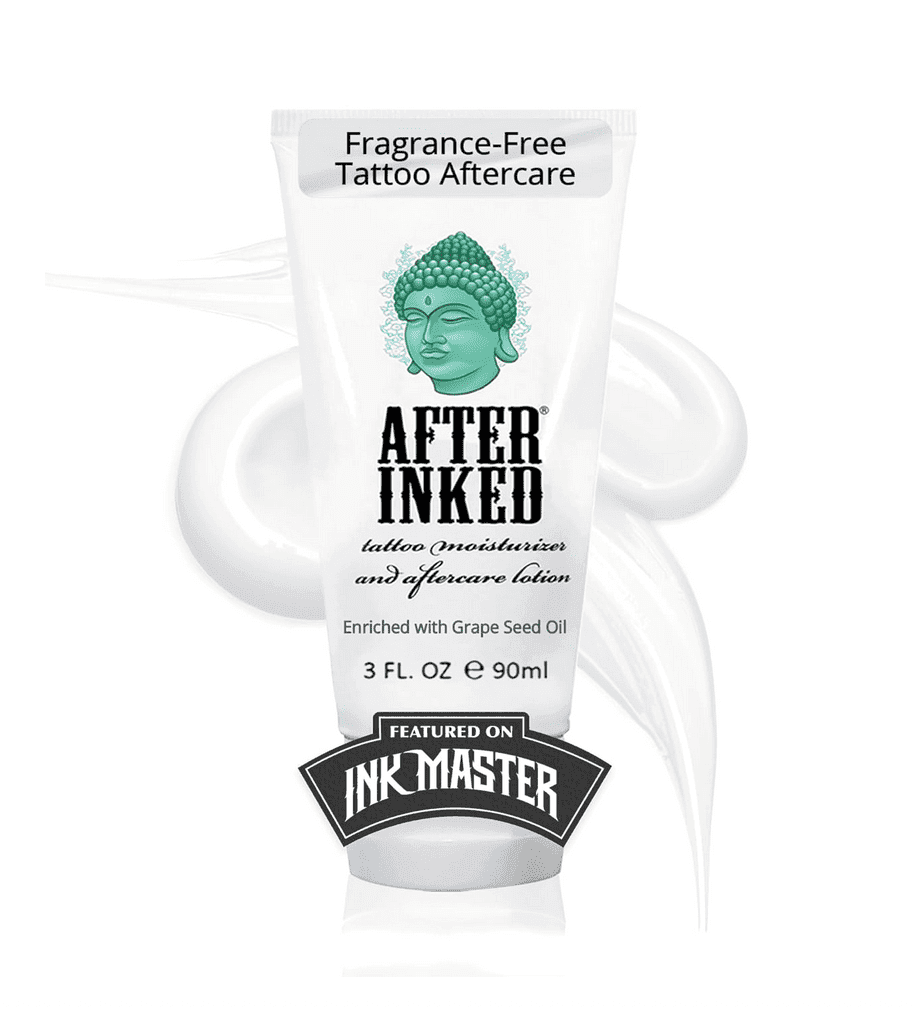
What it actually does This one is boring in the best way. Fragrance-free and absorbs fast + no greasy residue. The grape seed oil gives it a light feel that sinks in within a minute, so you're not waiting around before putting clothes back on. It works for new tattoos, old tattoos, and even permanent makeup if that's your thing. The travel size is convenient and the 3oz tube lasts longer than you'd expect.
It's not the most hydrating option out there if your skin is naturally dry or you're healing a large color piece, you might need to apply it more often than you would with a thicker balm.
Why the Epidermis Needs to Breathe Before It Needs to Hydrate
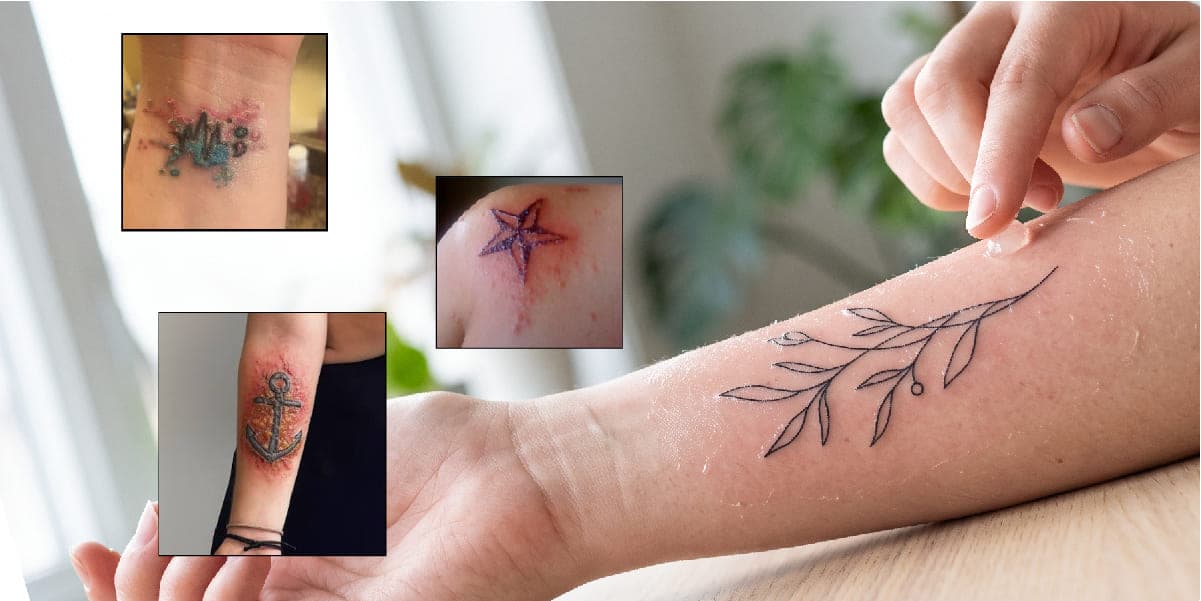
The epidermis rebuilds through a process called re-epithelialisation — keratinocytes at the wound edge migrate across the wound surface and differentiate into new epidermal cells. This migration requires a specific micro-environment: moist enough that cells do not desiccate and die mid-migration, but not so occluded that the oxygen exchange that drives cellular respiration is blocked. In the first 24 to 72 hours after tattooing the wound is still in the inflammatory phase — neutrophils and macrophages are clearing debris and the plasma weeping is part of this process. Applying a thick emollient during this phase does not hydrate the wound — it seals the exudate against the skin and creates a bacterial growth environment. From day four onwards when the inflammatory phase is resolving and re-epithelialisation is underway, a hydrating lotion supports the keratinocyte migration by keeping the wound surface moist enough for cell movement without blocking oxygen exchange. This is the clinical basis for the Aquaphor-then-lotion transition that most dermatologists recommend for wound care — and that most tattoo aftercare guides either skip or never explain.
"The most expensive aftercare lotion does nothing for a tattoo in the first three days. Apply it too early and you are sealing a wound that still needs to breathe."
Already have your design? Each design in our library includes the recommended aftercare protocol for its specific style and placement. Browse verified designs →
Exactly What To Do, Day by Day
WASH YOUR HANDS.
Every single time. You're touching an open wound.
CLEAN THE TATTOO.
Use fragrance-free soap and lukewarm water. Pat dry with a paper towel no cloth towels, they harbor bacteria.
APPLY A PEA-SIZED AMOUNT.
Dab it over the tattoo, then rub it in gently until it disappears. You shouldn't see A shiny layer sitting on top.
BLOT OFF EXCESS.
If it feels greasy after a minute, blot with a clean paper towel. <<Less is more>>.
REPEAT 2–3 TIMES DAILY.
Morning, after a shower, and before bed. Don't overdo it, over-moisturizing is just as bad as under-moisturizing.
What To Never Use
Petroleum-based products like Aquaphor or Vaseline
during the initial healing phase. They're occlusive they seal the skin completely and don't let it breathe. Fine for a day or two, not for a full heal.
Anything with fragrance or essential oils.
Linalool, limonene and geraniol these trigger inflammation in healing tissue and can cause ink migration over time. Natural doesn't mean safe.
Products that claim to "numb" or "speed heal."
There's no shortcut. Healing takes time. Anything promising faster results is usually lying or using ingredients that irritate the skin.
Using too much.
A pea-sized amount is plenty for most tattoos. <<More product doesn't mean better healing>>, it means clogged pores and potential breakouts.