Related Aftercare Protocols
- Stage 2 Hydration: Compare formulas in our Best Tattoo Aftercare Lotion Guide.
- Washing Protocol: See gentle cleanser options in our Best Soap for Tattoo Aftercare Guide.
- Complications: Learn to identify early symptoms in our Tattoo Infection vs Healing Guide.
The Ranked List
DISCLOSURE: This post contains affiliate links. If you purchase through our links we may earn a small commission at no extra cost to you.
Mad Rabbit Tattoo Care Bundle Kit (3-Piece)
BEST OVERALL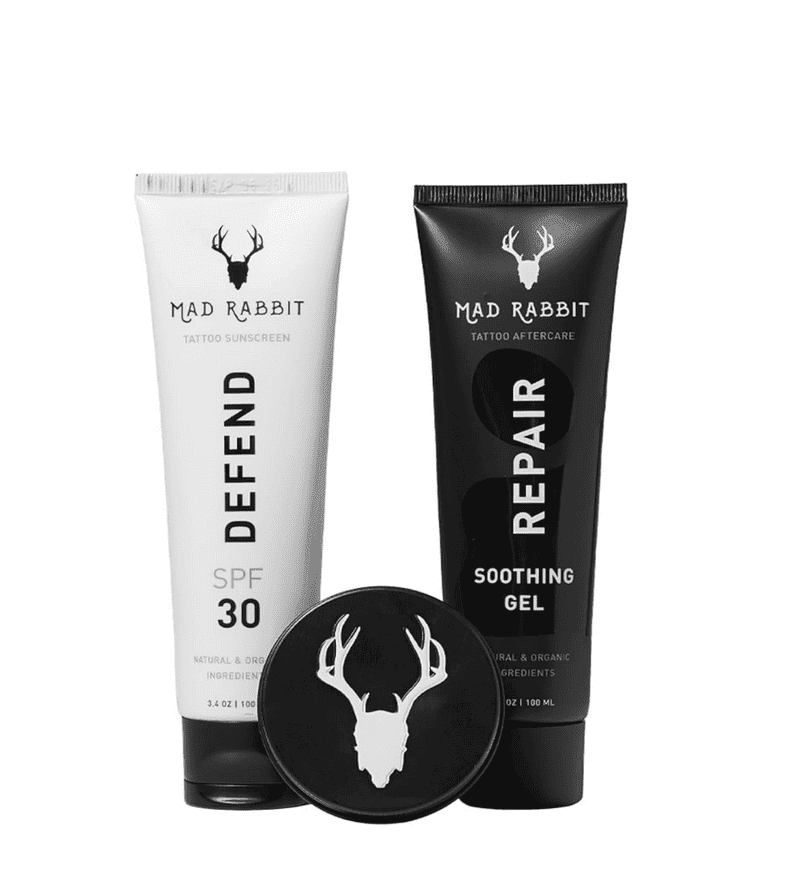
What it actually does >> This is the full package. The Repair Soothing Gel calms irritation and itchiness in fresh ink. The Enhance Balm boosts depth, clarity, and contrast apply daily and see results after one use. The Defend SPF 30 Sunscreen is a 100% mineral formula packed with antioxidants and vitamins to protect against UVA/UVB damage. Clean ingredients, no nonsense. It's the complete routine from healing to daily protection.
SPF 30 is the minimum recommended fine for daily use, but SPF 50 is better for long sun exposure. Also, you're buying three products, so it's a bigger upfront investment than just a sunscreen.
How UV Radiation Breaks Down Tattoo Pigment at a Molecular Level
Tattoo pigment molecules are organic compounds that absorb specific wavelengths of light — which is why they appear the colours they do. The colour you see is the wavelengths the pigment does not absorb and reflects back to your eye. UV photons at 280 to 400nm wavelengths carry enough energy to break the covalent bonds within these organic molecules — a process called photodegradation. When a bond breaks the molecule fragments into smaller compounds with different electron configurations. These fragments absorb and reflect different wavelengths of light than the original pigment molecule. The cumulative effect of millions of pigment molecules undergoing photodegradation is a visible colour shift in the tattoo — the characteristic greening of black ink and pinking of red ink that occurs over years of UV exposure. SPF sunscreen reduces the number of UV photons that reach the pigment by absorbing or reflecting them before they penetrate to the dermis where the pigment sits. SPF 50 allows approximately 2 percent of UVB photons to pass through — significantly reducing the photodegradation rate but not eliminating it. Broad-spectrum formulations also attenuate UVA radiation which penetrates more deeply and reaches the dermal pigment deposits more effectively than UVB.
"A tattoo never seen by direct sun barely fades over decades. The decisions made about sunscreen for the next ten years matter more than any product used in the first three weeks."
Already have your design? Each design in our library includes the recommended aftercare protocol for its specific style and placement. Browse verified designs →
Exactly What To Do, Day by Day
WAIT UNTIL FULLY HEALED.
No sunscreen on fresh tattoos. Cover with clothing for the first 4-6 weeks.
APPLY 15 MINUTES BEFORE SUN EXPOSURE.
Gives the sunscreen time to form a proper barrier.
USE ENOUGH.
Most people don't apply enough. A nickel-sized amount for each tattooed area is a good rule.
REAPPLY EVERY 2 HOURS.
Or after swimming, sweating, or towel drying.
DON'T FORGET THE EDGES.
Sun exposure on the skin around your tattoo can still cause ink spread over time.
MAKE IT DAILY.
Even on cloudy days. UVA rays penetrate clouds and windows.
What To Never Use
Chemical sunscreens with oxybenzone.
They can irritate sensitive skin and may interact with tattoo pigments. Also, they're bad for coral reefs.
Spray sunscreens as your only protection.
They go on uneven and you'll miss spots. Use them for touch-ups, not your primary application.
Applying sunscreen to fresh tattoos.
Wait 4-6 weeks until fully healed. Before that, cover with clothing.
SPF below 30.
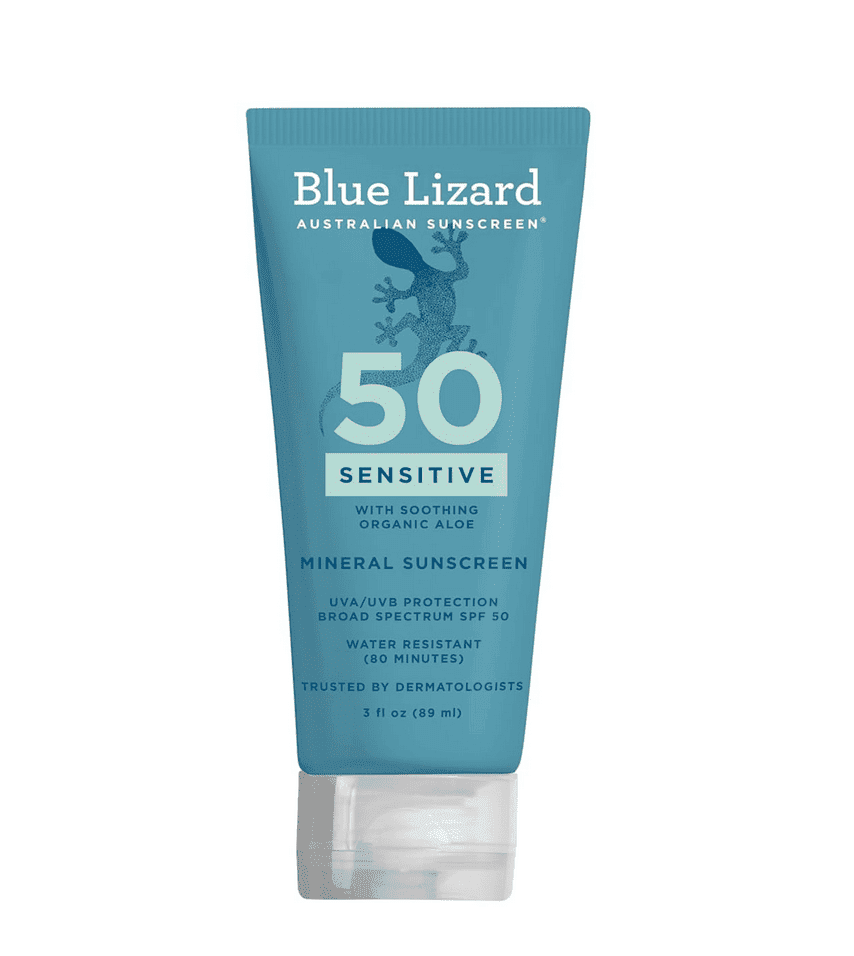
Experts say SPF 30 is the minimum—SPF 50 is preferred for tattoos in sun-exposed spots.
Fragranced sunscreens.
Fragrances can irritate tattooed skin, which is often more sensitive than surrounding skin.