Loading
EXPLORE THE ARCHIVE
All Guides & Insights — Page 3
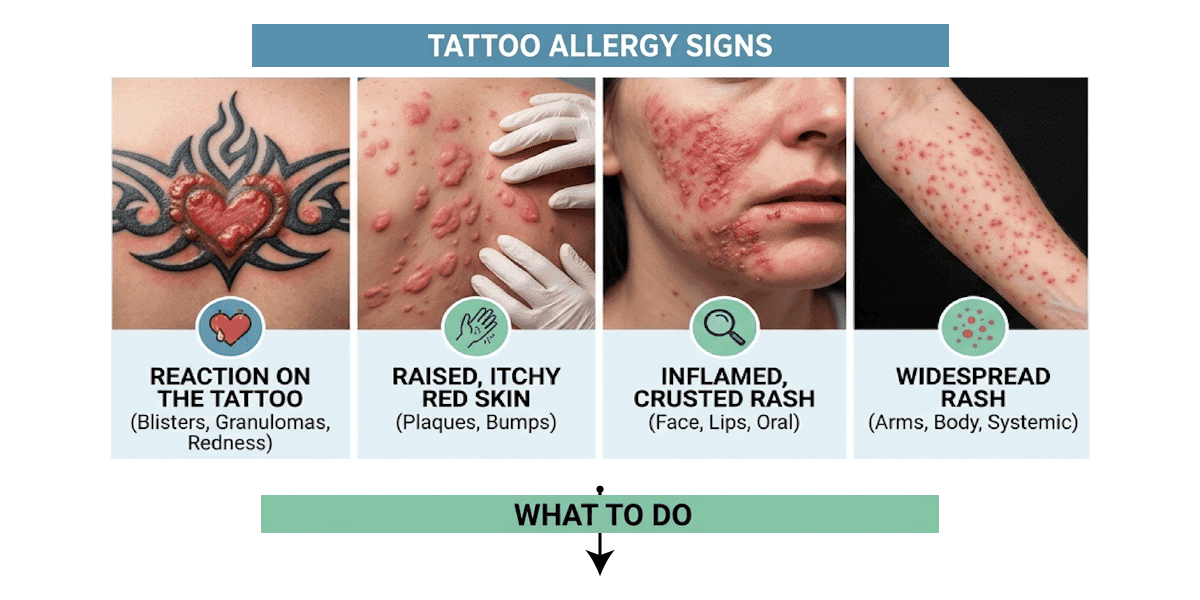
Tattoo Allergy — How to Spot One and What to Do About It
A tattoo allergy is your immune system reacting to the ink, and it can show up hours after a new tattoo or years into an old one, most often with red and certain coloured inks. Telling a true allergy apart from normal healing matters, because one needs patience and the other may need a doctor. This covers the real signs, how to distinguish an allergy from ordinary irritation or infection, what to do at each severity, and why red ink is the usual culprit.

TattoosMapAug 24, 2026 · 0 Comments

Can You Get a Tattoo Over a Scar? What's Possible and What Isn't
You can usually tattoo over a scar, but only once it's fully mature, and the scar's type and texture decide how well the ink actually takes. Scar tissue behaves nothing like normal skin — it holds ink unpredictably, and the wrong scar or the wrong artist turns a hopeful cover into a blurry mess. This covers which scars can be tattooed, how long to wait, why scar tissue is trickier to work with, and how to find someone who can actually do it well.
TattoosMapAug 23, 2026 · 0 Comments

How Much to Tip a Tattoo Artist — The Straight Answer
Tipping a tattoo artist trips people up because it's not printed anywhere and the amounts are bigger than restaurant tips, so a lot of people either under-tip good work or agonise over what's right. The clean answer is 15 to 20% of the total, same as any skilled service, with more for exceptional work. This covers exactly what to tip in every situation — big pieces, small ones, shop owners, multiple sessions — and the times tipping norms genuinely bend.
TattoosMapAug 21, 2026 · 0 Comments

How Much Does a Tattoo Cost? What You're Actually Paying For
Tattoo pricing confuses people because a tiny tattoo and a small one can cost the same, and two artists can quote wildly different numbers for the identical design. That's because you're not paying for ink and area — you're paying for an artist's time, skill, and a shop minimum that sets the floor. This breaks down what actually drives the price, realistic ranges by size and type, and why the cheapest quote is usually the most expensive decision you'll make.
TattoosMapAug 20, 2026 · 0 Comments
How Long After a Tattoo Can You Swim? The Honest Timeline
A fresh tattoo is an open wound, and submerging it before it heals risks infection, ink loss, and a faded result — which is why the answer is longer than most people want to hear. The real wait is 2 to 4 weeks until the skin has fully closed, not the few days people hope for. This covers exactly when it's safe to swim, why pools, oceans, and lakes each carry their own risks, and what happens to your tattoo if you don't wait.
TattoosMapAug 19, 2026 · 0 Comments

Face Tattoo Removal: Cost, Pain, and Real Results
Face tattoos clear faster than most body ink because facial skin is thin and richly supplied with blood, but the face is also the least forgiving place to get removal wrong. The stakes are higher on every axis — scarring shows permanently, the eyes need real protection, and cosmetic pigments can darken instead of fade. This covers the real cost, pain, and results for facial removal, and why practitioner choice matters more here than anywhere on the body.
TattoosMapAug 18, 2026 · 0 Comments

Tattoo Removal at Home — What's Actually Safe and What Will Scar You
There is no safe way to remove a real tattoo at home — every DIY method either does nothing or damages your skin, because permanent ink sits in a layer no home method can safely reach. The honest answer isn't a technique, it's a warning, plus what to do instead. This separates the harmless-but-useless from the genuinely dangerous, and explains why the "natural" methods trending online are the ones most likely to scar you.
TattoosMapAug 17, 2026 · 0 Comments

How to Remove Temporary Tattoos — Fast, Safe Methods That Actually Work
Temporary tattoos sit on the surface of your skin, which means they come off easily — no laser, no sessions, no cost — as long as you use the right method for the type you have. The mistake people make is scrubbing hard, which irritates skin without helping. This covers the quick safe methods for each kind of temporary tattoo, including the one exception that isn't harmless and needs real caution.
TattoosMapAug 16, 2026 · 0 Comments
Eyebrow Tattoo Removal: The Guide That Prevents Disasters
Eyebrow tattoos — microblading, powder brows, and older permanent makeup — are shallow and small, which sounds easy, but the pigments used are exactly the ones that go wrong under a laser. Flesh-tone and white-containing inks can oxidise instantly to a darker colour on the first pulse, turning a fixable brow into a worse one. Here's how removal actually works on brows, why saline is often the safer route, and the one test that prevents the most common disaster.
TattoosMapAug 15, 2026 · 0 Comments