DISCLOSURE: This post contains affiliate links. If you purchase through our links we may earn a small commission at no extra cost to you.
Clinics soften this and forums exaggerate it, so let's just be straight: yes, it hurts. But "it hurts" covers everything from a mild sting to genuine agony, and the truth for tattoo removal sits in a specific, manageable place that's worth describing honestly rather than selling or scaring.
What It Actually Feels Like
The standard clinic description is "a rubber band snapping against your skin," and that undersells it. A more honest comparison is tiny drops of hot grease or bacon fat flicking onto your skin in rapid succession, with a simultaneous sharp snapping sensation. Some people describe it as a hot elastic band flicked hard, over and over, fast.
It's a sharp, hot, staccato pain rather than a dull ache. And critically, it's brief. The laser fires in quick pulses and the whole treatment for a small tattoo is often 5 to 10 minutes of actual firing. You're not enduring an hour of it.
Compared to getting the tattoo: most people find removal more intense per second but dramatically shorter overall. A tattoo is hours of moderate discomfort. A removal session is minutes of sharper discomfort. Different shape of pain entirely.
Pain is genuinely individual and anyone giving you a single universal answer is guessing. Your pain tolerance, the tattoo's location, your sensitivity that day, even your anxiety level all change the experience. Some people breeze through sessions that leave others gritting their teeth. The descriptions here are the common experience, not a promise of yours — the only way to know how it feels for you is your first session, and it's usually less bad than the anticipation.
What Makes It Hurt More — Or Less
Pain isn't uniform. These factors move it in predictable directions.
Location is the biggest variable. Areas with thin skin over bone hurt considerably more, because there's less tissue between the laser and the nerve-dense layer around the bone. Worst spots: ankles, feet, fingers, wrists, ribs, sternum, collarbone, and the inner arm. Fleshier areas — outer thigh, upper arm, back, calf — are much more tolerable.
Ink colour and density. Black and dark ink absorb more laser energy, which means a stronger sensation. Dense, saturated professional work hurts more than sparse amateur ink for the same reason.
Tattoo size. More area is more total pulses, so more cumulative discomfort — though not more intense per pulse.
The laser type. Picosecond lasers deposit less heat than Q-Switch, and many people find them somewhat less painful as a result.
Your tech's skill. Fluence choice, pacing, and use of cooling all shape the experience. A good tech reads your response and adjusts.
Session number. Oddly, later sessions often hurt less — there's less ink to absorb energy, and your anxiety drops once you know what to expect. The first session is frequently the worst, partly for that reason.
The location factor is the one clinics rarely spell out, and it matters most for exactly the tattoos people most want gone — the wrist, finger, and ankle pieces from an impulsive decision. If your tattoo is on a bony spot, be prepared for genuinely more discomfort than a forearm piece, and lean harder on numbing rather than being caught off guard. It's still manageable. It's just honestly more.
How to Actually Reduce the Pain
This is the part that matters, because pain is manageable and there's no medal for suffering through it.
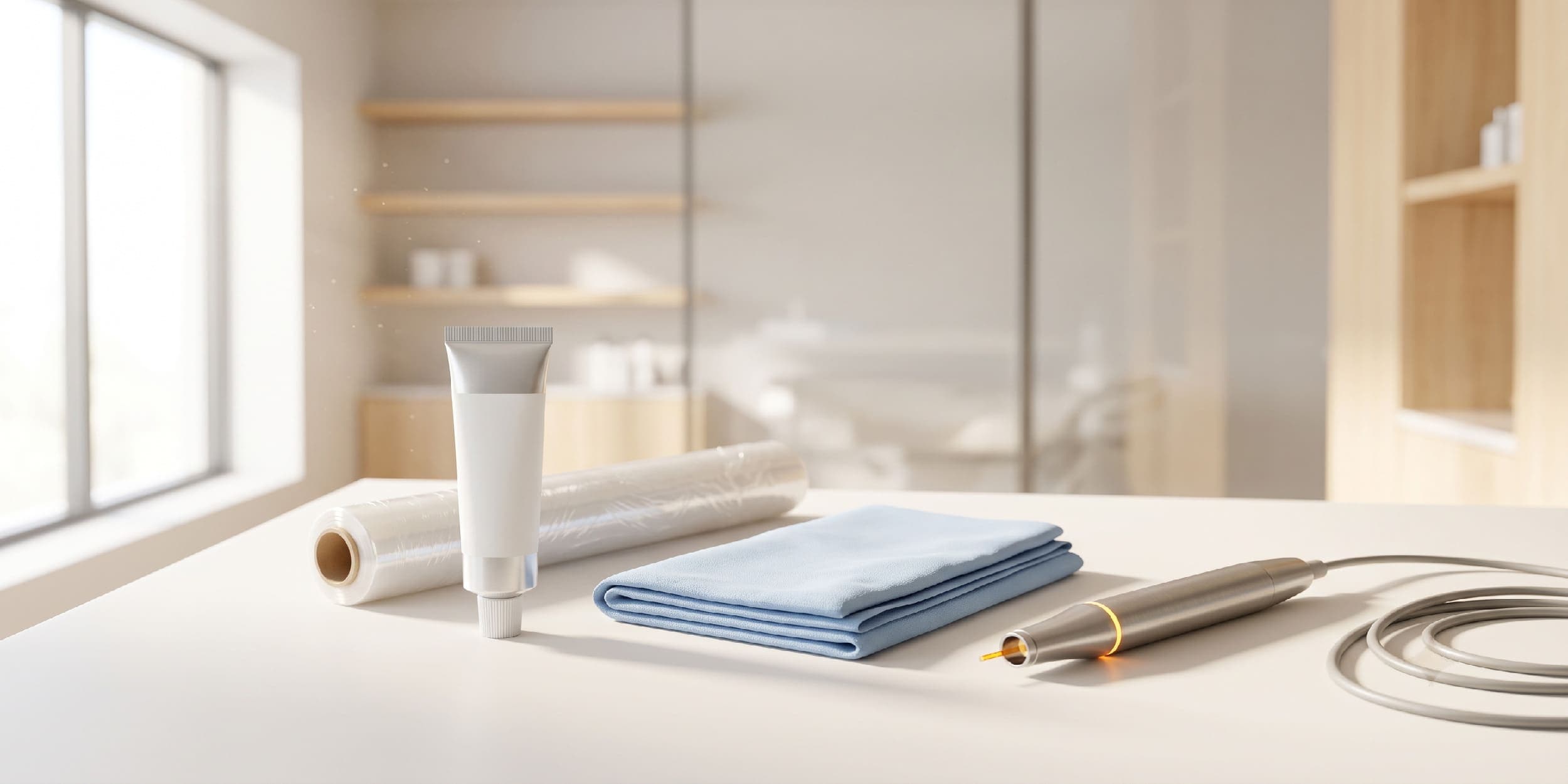
Topical numbing cream. Lidocaine-based, applied 30 to 45 minutes before under cling film so it penetrates. This is the single biggest lever. Buy your own — the pharmacy version is identical to the marked-up clinic tube.
Cooling. Many clinics use a Zimmer cooling machine that blows cold air on the area during treatment, which meaningfully dulls the sensation. Ask if they have one. A cold pack over cloth before and after helps too.
Injected anaesthetic. For very sensitive areas or low pain tolerance, some clinics offer lidocaine injections. More effective, more involved, usually more expensive — worth asking about for a bony or highly sensitive spot.
Time it well. Don't go over-caffeinated or on no sleep, both of which lower pain tolerance. Skip alcohol beforehand — it thins blood and increases sensitivity and bruising.
Breathe and communicate. Tell your tech if you need a pause. A good one builds in breaks. Tensing and holding your breath makes it worse.
Numbing cream helps a lot but doesn't erase the sensation entirely, and it's fair to know that going in. It takes the edge from sharp-and-startling down to uncomfortable-but-fine for most people — not to nothing. Clinics sometimes imply it'll be painless, and when it isn't, people feel misled and lose trust. Set the honest expectation: numbing makes it very manageable, not imperceptible. That framing is what actually keeps people in their chairs through the full course.
The Real Problem Isn't the Pain — It's Quitting Over It
Here's what nobody frames correctly. The pain itself is brief and manageable. The actual danger is that pain drives people to abandon their course, and a half-finished removal is the worst outcome available.
People try to tough it out without numbing to save $30, hit their limit around session three or four, and stop coming. That's exactly the point where the tattoo often looks stalled anyway — the session three-to-five plateau — so discomfort plus apparent lack of progress becomes the perfect storm for quitting. And quitting there leaves a permanent, faded grey ghost that's worse-looking than either the original tattoo or a finished result.
So the goal isn't heroically enduring maximum pain. It's the opposite — minimise the discomfort with every tool available so that finishing the course is easy, because finishing is the only thing that gets you the result you're paying for.
Reframing pain as a completion problem rather than an endurance test is the most useful thing in this whole guide, and it's the opposite of how tough-it-out culture frames it. The people who finish aren't the ones with the highest pain tolerance — they're the ones who numbed properly, spaced their sessions sensibly, and never let a single bad session convince them to stop. Spending on numbing isn't weakness or waste. It's the cheapest insurance on the thousands you're already spending to finish.
Setting Honest Expectations by Situation
- Small forearm or thigh piece, numbed — sharp but brief, very manageable, over in minutes
- Bony spot (wrist, ankle, finger, rib), numbed — genuinely more intense, still doable, lean hard on numbing and cooling
- Large piece — done in sections, more cumulative discomfort, ask about breaks and cooling
- Low pain tolerance anywhere — ask about injected anaesthetic and a picosecond machine
- First session anxiety — usually worse in anticipation than reality, and later sessions typically ease
Think of it like a flu shot versus a long dull ache. The needle is sharp and it makes you flinch — but it's over in a second, and the anticipation is the worst part. Tattoo removal is a series of those sharp flinches packed into a few minutes, with numbing turning the needle into something much duller. Unpleasant, yes. Unbearable, no. And knowing that honestly beforehand is most of what makes it fine.
Related Removal Guides
- Laser Comparison: Compare pulse mechanisms in our PicoWay vs PicoSure vs Q-Switch Guide.
- Budget & Estimations: Calculate total sessions with our Tattoo Removal Cost Calculator.
- Post-Laser Healing: Read what to expect in our Laser Tattoo Removal Blister Care Guide.
WHY BONY AREAS HURT SO MUCH MORE
Tattoo removal pain is mechanically different from tattooing pain and understanding why changes how people experience it. When a pulsed laser fires onto tattooed skin, the pigment particles absorb the energy and undergo rapid photothermal expansion — heating to thousands of degrees in nanoseconds and shattering into fragments. The shockwave generated by this thermal expansion is called a photoacoustic effect and it is felt as a sharp snap rather than the sustained dragging sensation of a tattoo needle. The nociceptors — the specialised nerve endings in the dermis that detect tissue damage — respond to both the heat and the pressure wave simultaneously. This produces an intense but very brief sensation per pulse. Most patients describe it as a rubber band snapping against sunburned skin. The total discomfort per session is actually lower than a tattoo session of equivalent area because each laser pulse takes a fraction of a second rather than continuous needle contact over hours. Picosecond lasers produce shorter pulses than nanosecond Q-switch devices. The shorter the pulse, the more the energy is absorbed mechanically rather than thermally — meaning less heat deposited into surrounding tissue and slightly less post-treatment soreness. This is one genuine clinical advantage of picosecond technology beyond its marketing claims. The areas that hurt most during removal are the same areas that hurt most during tattooing — ribs, spine, hands, feet, and anywhere with thin skin over bone. Topical anaesthetic applied under occlusion for 45 to 60 minutes before a session reduces the sharp sensation significantly but does not eliminate the pressure wave felt through deeper tissue.
"The people who finish aren't the ones with the highest pain tolerance — they're the ones who numbed properly and never let one bad session stop them."
Exactly What To Do, Day by Day
APPLY TOPICAL NUMBING 30 TO 45 MINUTES BEFORE UNDER CLING FILM
Lidocaine-based cream needs time and occlusion to penetrate properly. Buy your own pharmacy tube — it's identical to the marked-up clinic version and it's the single biggest pain lever you have.
ASK ABOUT COOLING AND INJECTED ANAESTHETIC FOR SENSITIVE SPOTS
A Zimmer cold-air machine dulls the sensation during treatment, and for bony or highly sensitive areas, injected lidocaine reaches deeper than topical cream can. Ask before booking, not on the day.
PREPARE YOUR BODY THE DAY BEFORE
Sleep well, don't over-caffeinate, and skip alcohol beforehand — poor sleep and caffeine lower pain tolerance and alcohol increases sensitivity and bruising. How you arrive changes how it feels.
BREATHE AND ASK FOR BREAKS DURING TREATMENT
Tensing and holding your breath amplifies the pain, so breathe steadily and tell your tech when you need a pause. A good technician builds in breaks and adjusts to your response.
TREAT FINISHING AS THE GOAL, NOT ENDURING MAXIMUM PAIN
Use every comfort tool available so completing the full course stays easy. Quitting mid-way over discomfort wastes everything spent and leaves a faded ghost worse than the original.
What To Never Use
Skipping numbing to save money
pain is the number one reason people abandon a course, and quitting mid-way wastes the entire investment and leaves a permanent faded ghost.
Drinking alcohol before a session
it thins the blood and increases both sensitivity and bruising, making the experience worse and the healing rougher.
Toughing out a bony-area tattoo with topical cream alone
surface numbing can't reach the deep periosteal nerves, so ask about injected anaesthetic or heavy cooling for wrists, ankles, ribs, and fingers.
Letting one bad session convince you to quit
later sessions usually hurt less as ink thins and anxiety drops, and the session three-to-five plateau makes discomfort feel like failure when it isn't.