Tattoo Removal at Home: What's Safe and What Scars
Tattoo Removal7 MIN READ
Tattoo Removal at Home — What's Actually Safe and What Will Scar You
No home method safely removes a real tattoo. Which DIY approaches are useless, which ones scar you, and why doing nothing beats them all until you see a pro.
By TattoosMap Editorial — August 2026
The Short Answer
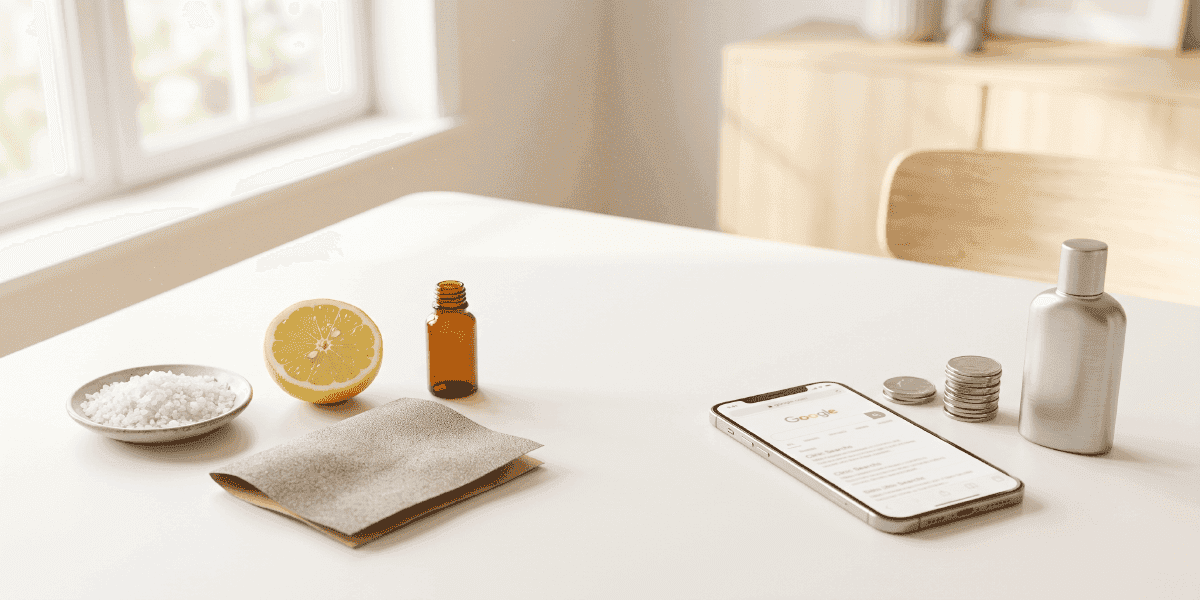
No home method safely removes a permanent tattoo — the ink sits in the dermis, and anything that reaches it from home is essentially wounding your skin, which risks scarring and infection while leaving the tattoo. Creams don't penetrate, and abrasive or acid methods like salt scrubs, sandpaper, lemon, and DIY acids cause chemical burns and permanent scars. The only safe path is professional laser removal; the safest thing you can do at home is not attempt removal at all.
DISCLOSURE: This post contains affiliate links. If you purchase through our links we may earn a small commission at no extra cost to you.
Search "tattoo removal at home" and you'll find dozens of methods promising to save you the cost of a clinic. Here's the honest version, which no one selling those methods will give you: none of them safely remove a real tattoo, and several will leave you with a scar that's harder to live with than the ink was. The safest home method is not doing it.
Why Home Removal Can't Work Safely
A permanent tattoo isn't on your skin, it's in it — the ink was deposited into the dermis, the deep living layer beneath the surface. That depth is the entire reason tattoos are permanent, and it's the entire reason home removal fails.
Anything applied to the surface faces a choice. Either it's mild enough to be safe, in which case it never reaches the dermis and does nothing to the ink — or it's aggressive enough to reach the ink, in which case it's destroying the skin barrier and the tissue on the way there. There's no home method that threads that needle, because threading it requires delivering precise energy to the ink while sparing the skin, which is exactly and only what a laser does.
So every home approach collapses into one of two outcomes: harmless and useless, or damaging and still useless. The tattoo, sitting safely in the dermis, tends to survive both.
HONEST LIMITATION
This is genuinely a case where the honest answer is "don't," and that's an unsatisfying thing to tell someone who came looking for a method. But pretending a safe effective home option exists would be the actively harmful thing to do. The reason there's no trusted DIY technique isn't that nobody's clever enough to have found one — it's that the physics of where your ink sits makes a safe surface-based removal impossible. The absence of a good home method is information, not a gap you can fill with the right hack.
The Harmless-But-Useless Methods
These won't remove your tattoo, but they mostly won't hurt you either. They're a waste of time and money rather than a danger.
Removal creams. They can't penetrate to the dermis. At best they lighten the surface skin cosmetically for a temporary illusion; the ink is untouched.
Skin-lightening products. Same story — they pale the skin over the tattoo slightly, which reverses when you stop, and never affect the ink.
Aloe, vitamin E, honey, and gentle "natural" pastes. Fine for your skin, useless on ink sitting in the dermis. Harmless, and equally ineffective.
WHY REACHING THE INK MEANS WOUNDING THE SKIN
The impossibility of safe home removal comes down to a single unavoidable trade-off rooted in where tattoo ink sits. Ink is deposited in the dermis, below the epidermis, and your body has encapsulated the larger pigment particles so they stay put — that's what makes a tattoo permanent. To remove that ink, you have to affect it where it lives, and from the outside there are only two ways to reach the dermis: pass energy through the epidermis without harming it, or physically destroy the epidermis to get past it. A laser does the first — it delivers light that travels through the transparent surface layer and is absorbed only by the pigment below, converting to a shockwave that shatters the ink while sparing the skin around it. Every home method is stuck with the second option, because none of them can produce targeted, absorbable energy. Abrasion, acid, and heat can only reach the dermis by grinding, burning, or dissolving through the epidermis that protects it. This is why the harm isn't incidental to home removal — it's the mechanism. When you scrub with salt or sand until a tattoo starts to fade, the fading is happening because you're removing layers of skin, and by the time you've abraded deep enough to disturb dermal ink, you've created an open wound in the dermis. Wounds in the dermis heal through scar formation: the body lays down disorganised collagen to bridge the damage, producing raised, textured, or discoloured tissue that is permanent in a way the epidermis's normal renewal is not. Acids work the same way, chemically instead of mechanically, burning through layers and triggering the same inflammatory scarring response. So the deeper any home method reaches toward the ink, the more dermal damage it does, and dermal damage is precisely what a scar is. The laser's whole advantage is that it decouples reaching the ink from wounding the skin — a separation no home technique can replicate, because the separation requires targeted energy, not force.
SHARE THIS
"Between an unwanted tattoo and a scarred patch of skin with the tattoo still faintly there, the untouched tattoo wins every time — doing nothing beats most home methods."
What To Never Use
Salt scrubbing, sanding, or home dermabrasion
these "work" only by wounding the skin down to the ink, which is the exact mechanism that produces a permanent scar where the tattoo was.
DIY acids like TCA or aggressive lemon-and-abrasion methods
they cause uncontrolled chemical burns, scarring, and infection risk while the ink, sitting deeper than the burn reaches, largely survives.
Consumer "laser" or IPL devices on a tattoo
they're far too weak to remove ink and can burn or discolour skin, and some explicitly warn against use over tattoos.
Any method framed as "natural" and therefore safe
salt, lemon, and abrasion cause the same burns and scars as synthetic chemicals, so natural-sounding is not a safety rating.
Frequently Asked Questions
No. A permanent tattoo's ink sits in the dermis, and any home method that reaches it is essentially wounding your skin, which risks scarring and infection while leaving the ink. Mild methods can't penetrate and do nothing; aggressive ones damage skin. The safest home choice is not attempting removal and seeing a professional instead.
No home method reliably and safely removes a permanent tattoo. Creams and lightening products can't reach the ink; salt, sand, lemon, and DIY acids only damage the skin. The ink usually survives all of them. Professional laser removal is the only proven method because it reaches the ink without destroying the surrounding skin.
Yes. Salt scrubbing and lemon-with-abrasion cause chemical burns and skin damage, and they remove ink only by abrading down to it — which is exactly how you create a permanent scar. "Natural" doesn't mean safe; these methods are among the more damaging ones and don't reliably remove the tattoo.
Often, yes. Scar tissue from abrasion, burns, or acid blocks laser penetration and can trap ink where the laser can't reach it, so a botched home attempt can leave you with a harder job than doing nothing. You can remove ink with a laser, but you can't always remove the scar a home method leaves.
Everything except the removal itself — save toward a proper consultation, protect the tattoo from sun, look after your general health to support immune clearance, and research clinics and realistic results. Home removal of temporary tattoos is fine, but for permanent ink the actual removal belongs with a professional.
Discussion (0)
Verified Accounts
No public comments yet.
TATTOOSMAP VERIFIED CLINICS
Ready To Start?
Get a free consultation quote from a verified removal clinic. No commitment, just a real price for your specific tattoo.
The risk with these is opportunity cost — months spent and money wasted on something that was never going to work, sometimes delaying the professional removal you'll end up getting anyway.
HONEST LIMITATION
The genuinely harmless methods have one hidden cost worth naming: false hope that keeps you from the real solution. Someone who spends six months and a few hundred dollars on creams and lightening gels hasn't damaged their skin, but they've delayed starting a laser course, spent money that could have funded a real session, and often ends up frustrated and distrustful of removal generally. Useless-but-safe is better than dangerous, but "it didn't hurt me" is a low bar — these still cost you time, money, and momentum toward the thing that actually works.
The Genuinely Dangerous Methods
These are the ones that cause real, lasting harm, and they're often the exact methods trending as "natural" or "cheap" alternatives. Treat this section as a list of things not to do.
Salt scrubbing / salabrasion. Abrading the skin with salt until it breaks down. It "works" only by wounding your skin down to where the ink sits, which is precisely how you produce a scar where the tattoo was. An old pre-laser technique for exactly that reason.
Sand, pumice, or sandpaper (dermabrasion at home). Grinding off skin layers. Uncontrolled, unsterile, and a direct route to scarring and infection.
Lemon juice, especially with abrasion. The acid-plus-scrubbing combination irritates and can burn; it doesn't reach the ink.
DIY acids (TCA and similar sold online). Uncontrolled chemical burns. These cause scarring, hyperpigmentation, and infection risk while the tattoo, deeper than the burn reaches, largely survives.
Home "laser" or IPL devices. Consumer units are far too weak to remove tattoos and can burn or discolour skin. Some IPL devices explicitly warn against use over tattoos.
Cutting or burning. Self-explanatory and genuinely dangerous — serious infection risk, severe scarring, and no removal.
Every one of these shares a mechanism: they damage skin in the hope the ink comes with it, and mostly the skin is damaged while the ink stays.
HONEST LIMITATION
The "natural" framing on salt, lemon, and abrasion methods is actively misleading and worth calling out directly, because natural-sounding does not mean safe. Salt and lemon are natural; a chemical burn and a permanent scar from them are just as damaging as from a synthetic acid. These methods are arguably more dangerous than the useless creams precisely because they seem wholesome and DIY-friendly, so people apply them with confidence and repetition — and repeated abrasion or acid on the same spot is exactly how you convert a tattoo into a scar. Natural is not a safety rating.
Why Botched Home Attempts Make Professional Removal Harder
This is the part that turns a bad idea into an expensive one. A home attempt that scars your skin doesn't just fail — it actively complicates the laser removal you'll likely end up seeking.
Scar tissue from abrasion, burns, or acid blocks laser penetration and can trap ink where the laser can't reach it effectively. So someone who scarred their skin trying to save money arrives at a clinic with a harder job than they'd have had if they'd done absolutely nothing — sometimes a job that can't fully succeed, because you can remove the ink but not always the scar. Our aftercare protocol exists precisely because controlled healing prevents this kind of scarring; uncontrolled home damage does the opposite.
HONEST LIMITATION
"Just do nothing" genuinely beats most home methods, and that's worth sitting with because it's counterintuitive. A tattoo you leave completely alone stays exactly as it is, causes no harm, and remains fully treatable by a professional whenever you're ready. A tattoo you attack at home may end up scarred, discoloured, still visible, and harder to treat. Between an unwanted tattoo and a scarred patch of skin with the tattoo still faintly there, the untouched tattoo is the better starting point every time. Doing nothing isn't giving up — it's preserving your options.
What's Actually Safe to Do at Home
There is a real home role — it's just not removal. It's everything that supports safe professional removal.
Save toward a proper consultation instead of spending on creams. The money's better placed there. Our cost guide shows what it really runs.
Protect the tattoo from sun if you're planning removal — sun-damaged skin complicates treatment.
Look after your general health. Hydration, not smoking, sleep, and exercise all support the immune clearance that laser relies on, so arriving at removal in good health genuinely helps.
For temporary tattoos, home removal is fine — that's a different, surface-level situation entirely, covered in our guide to removing temporary tattoos.
HONEST LIMITATION
It's fair to acknowledge the real reasons people look for home methods — cost, embarrassment, impatience, or a bad experience with a clinic — because dismissing those doesn't make them go away. But none of them is solved by scarring yourself. If cost is the barrier, saving toward one consultation beats wasting money on creams; if it's embarrassment, clinics see unwanted tattoos every single day; if it's urgency, no home method is faster at actually removing ink than starting a proper course. The pull toward DIY is understandable. The methods still don't work, and the honest thing is to say so rather than offer a comforting technique that harms you.
Think of it like a filling deep in a tooth. You'd never take a drill to your own molar at home, however much you wanted to skip the dentist — the thing that needs fixing is buried in a place only the right tool, in trained hands, can safely reach. Your ink is that deep. Everything you can safely do at home is preparation and care around the edges; the actual removal is a job for equipment you don't own and shouldn't improvise.